
The first place my World War Two refugee family landed in America was a sprawling corporate-run farm that “The Spinach King” had created in rural south New Jersey.
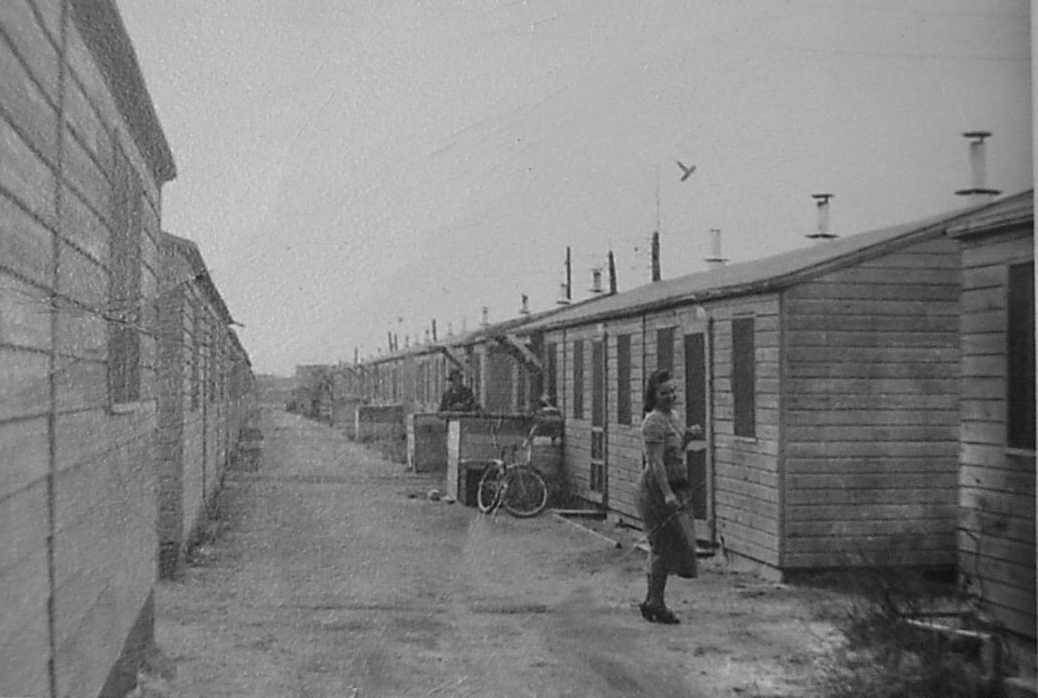
As displaced persons, they were sponsored for work in this country by Charles Franklin (C. F.) Seabrook. By the time they arrived, Seabrook Farms had become one of the biggest producers of flash-frozen vegetables in the country.

Seabrook Farms held the most extraordinary conglomeration of people. C. F.’s grandson, John, describes it in a 1996 a fascinating New Yorker article, The Spinach King, like this:
Many of the workers at Seabrook Farms were refugees of twentieth-century upheavals and hardships: Italians avoiding their war with Turkey in the nineteen-tens; former soldiers of the White Russian Army in the late teens and early twenties; Americans who lost their jobs during the Depression; Jamaicans and Barbadians and German prisoners of war in the forties; Poles, Hungarians, and Czechs fleeing the advance of the Soviet Army in 1945; Japanese Americans from ’44 to ’47; and Estonians and Latvians running from Stalin’s rule in the late forties and early fifties. My grandfather built “ethnic villages” for the different groups, and this collection of villages became Seabrook. In the nineteen-forties and fifties, there were thirty different languages spoken in Seabrook, a town of about five thousand people.
Although it occurred before my birth, the legacy of Seabrook Farms as my family’s first home deeply infused my psyche. I can still picture the wooden trailer in which they had towed all their belongings when they finally left to strike out on their own. It remained a ghostly fixture in the back yard of our house in North Jersey for decades, until all the boards—paled by rain, sun, wind and time—deteriorated and all that remained was the steel axle and wheels. My mother planted flowers around it.
Seabrook Farms (1949) imagines my mother’s arrival to this place—both the salvation and disbelief—you mumble, home, until it rises like a question. It was published in my book Mouth Quill—Poems with Ancestral Roots.
NEW! Click below on the Audio to hear Kaja Weeks reading of the full poem, Seabrook Farms (1949).
Click below on Download to access the full poem in print.
NEW ANNOUNCEMENT! THE WORLD PREMIERE of the film by Helga Merits (a Dutch-Estonian journalist and documentary filmmaker) The Paradox of Seabrook Farms announced! MARCH 16th 2024 at 11 am at the Levoy Theatre in Millville, NJ. The film includes her extensively researched account of an amazing time and place in American history.

Update for Seabrook Farms (1949) – January 2025
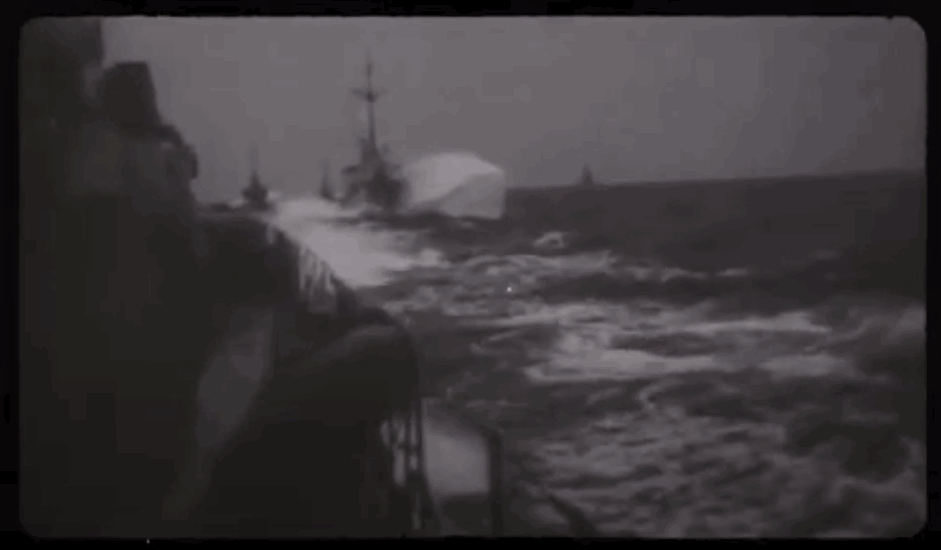
I’m thrilled and proud to announce that Helga Merits has included an illustrated audio version of my poem Seabrook Farms (1949) in Bonus Material for the newly released DVD version of her film The Paradox of Seabrook Farms.
Stunning historic photo and film footage with originally composed music lift the recitation to a new level.
An explanation of motivation for writing the poem is included as well:
I wrote the poem Seabrook Farms (1949), first, to imagine my mother’s experience there and to illustrate psychological dissociation as a shocking rift that can arise from displacement, specifically as it relates to our notion of what is Home. After a terrifying flight from her war-torn native land, she arrives in a new land, but how can her mind accept the south Jersey fields of spinach and barracks to be Home, when Home means the free, white beaches of Pärnu in Estonia? That homeland has literally vanished from beneath her feet, and even far away it is no longer free.
Secondly, I wanted to reflect intergenerational transmission of trauma that many of us as children of refugees experienced, as well as the resolve to heal. Unborn, I could not be there for her at the time of this stressful rupture, but I could bear witness later. In the poem I reimagine myself as a persona within her, not giving up—I will cavort inside your stunned mind’s eye until you can wake to yourself.
 Lyric Overtones